

Risk Management · 2025
In this section3 topics
Risk Management Policy & Plan
Policy & Plan Description
NTF Intergroup (Thailand) Public Company Limited ("the Company") places importance on risk management as a crucial mechanism to support good corporate governance and drive the organization to achieve its strategic objectives sustainably amidst a volatile business environment.
The Company has adopted the Enterprise Risk Management (ERM) framework based on COSO guidelines, an international standard, as the primary structure for risk management. This framework is integrated into business planning processes, strategic decision-making, and operations at all levels, ensuring that risk management is an integral part of business operations.
The Company stipulates that risk management is a shared responsibility of the Board of Directors, executives, and employees at all levels. It involves a systematic process covering risk identification, assessment of likelihood and impact levels, establishment of control and mitigation measures, clear assignment of responsibilities, and continuous monitoring and reporting of results, to manage risks within an acceptable level (Risk Appetite).
At the Board of Directors Meeting No. 2/2567 on May 15, 2567, the Risk Management Policy was approved, and a Risk Management Working Group was appointed to drive operations at the organizational level. Furthermore, at the 3/2569 meeting on February 23, 2569, the risk management plan was reviewed and approved, stipulating comprehensive risk assessment from both internal and external factors, along with quarterly monitoring of performance through the relevant committees.
At the 3/2569 meeting on February 23, 2569, the appointment of the Risk Management and Sustainable Development Committee was approved. Its function is to support the Board of Directors in establishing policies, rules, and operational guidelines for risk management and sustainable development across the entire organization, as well as to oversee the effective implementation of risk management and sustainable development systems or processes to appropriately mitigate impacts on the company's business. The Risk Management Working Group reports directly to the Risk Management and Sustainable Development Committee meeting.
Risk Management Framework and Plan
The Company categorizes risks into 5 main groups to enable efficient management, covering all dimensions of business operations, as follows:
-
Strategic Risk is the risk that may affect the organization's ability to achieve its objectives, arising from the formulation or implementation of strategies that are inconsistent with the business environment or market changes.
-
Operational Risk is the risk arising from inadequate or failed processes, people, systems, or external events, which may impact operational efficiency and continuity.
-
Financial Risk is the risk that may affect financial position and operating performance, such as fluctuations in exchange rates, interest rates, and liquidity management.
-
Compliance Risk is the risk arising from the inability to comply with relevant laws or regulations, which may impact the company's reputation and business continuity.
-
Information Technology Risk is the risk associated with information technology systems, including cyber threats, system disruptions, and data breaches.
Risk Management Structure
The Company has established a multi-layer governance structure for risk oversight to ensure systematic checks and balances, monitoring, and follow-up, with details as follows:
-
The Board of Directors oversees the overall risk management, approves policies and operational frameworks, and monitors and evaluates performance to ensure that risk management aligns with the organization's direction.
-
The Risk Management and Sustainable Development Committee regularly communicates, exchanges information, and coordinates with the Audit Committee regarding risks and internal controls that have or may have an impact on subsidiaries.
-
The Executive Committee is responsible for implementing risk management policies and frameworks at the organizational level, overseeing significant risks, and driving tangible results in risk management.
-
The Risk Management Working Group is responsible for identifying, analyzing, and assessing risks, defining control measures and risk management plans, monitoring results, and continuously reporting to relevant executives and committees.
-
All executives and employees are responsible for strictly adhering to risk management policies and processes and participating in operational-level risk management to ensure comprehensive risk control throughout the organization.
Risks to the Company's Business Operations
Risk Register
| Risk Name | Risk Characteristics | Consequences | Management Measures | Related Risk Factors | |||||||||||||||||||||||||||||||||||||||||||||||||||||||||||||||||||||||||||||||||||||||||||
|---|---|---|---|---|---|---|---|---|---|---|---|---|---|---|---|---|---|---|---|---|---|---|---|---|---|---|---|---|---|---|---|---|---|---|---|---|---|---|---|---|---|---|---|---|---|---|---|---|---|---|---|---|---|---|---|---|---|---|---|---|---|---|---|---|---|---|---|---|---|---|---|---|---|---|---|---|---|---|---|---|---|---|---|---|---|---|---|---|---|---|---|---|---|---|---|
| Risk from reliance on major customers | The popularity of Thai durian in the Chinese market continues to grow, leading to rapid revenue growth for the Company. The Company's sales revenue over the past three years (2023-2025) shows a CAGR of 111.7%, and in 2025, it grew by 126.2% from 2024. The Company's product sales are not structured as long-term contracts; instead, customers and the Company jointly discuss and finalize annual purchase estimates, with monthly discussions to monitor these estimates. In 2025, the Company faces customer concentration risk (sales revenue exceeding 30% of total sales revenue). Details are as follows:
In 2025, the Company sold products to Customer 1 and Customer 2, accounting for 15.9% and 19.6% of total sales revenue, respectively. The shareholder groups of these two companies are distinct and unrelated. A brief overview of these two customers is as follows:
In 2025, the Company was able to reduce its reliance on Customer 1 and Customer 2, with sales not exceeding 30% of total sales revenue. However, Customer 3 holds 100% ownership of Customer 4, making these two companies part of the same group. The combined sales of Customer 3 and Customer 4 accounted for 32.0% of total sales revenue. A brief overview of Customer 3 and Customer 4 is as follows:
| If customers 3 and 4 simultaneously reduce or cease orders, or if there is a reason for them to simultaneously cease operations, this could significantly reduce the Company's sales revenue and negatively impact the Company's operating performance and liquidity. However, should such an event occur, the Company can sell its products to other customers, as the demand for the Company's products currently exceeds its production capacity, particularly for durian and longan products from China. | The company continues to implement its customer dependency risk management guidelines, aiming to reduce reliance on any single customer to less than 30% of sales revenue within 1-2 years, as follows:
| 734 · Description: Reliance on large customers or few customers · Info category: STRATEGIC_RISK | |||||||||||||||||||||||||||||||||||||||||||||||||||||||||||||||||||||||||||||||||||||||||||
| Risk from a limited number of customers and customer concentration in China | During the period 2023-2025, the Company generated revenue from sales to customers in China in proportions of 93.9%, 97.2%, and 99.3% of total revenue. | Sales to a total of approximately 16 customers mean the Company faces risks from having a limited number of customers and risks from customer concentration in China. Furthermore, the Company's production capacity and capital limitations result in an inability to meet all current customer demand, as well as an inability to accommodate demand from new customers. |
| 734 · Description: Reliance on large customers or few customers · Info category: STRATEGIC_RISK | |||||||||||||||||||||||||||||||||||||||||||||||||||||||||||||||||||||||||||||||||||||||||||
| Risk of reliance on fruit packing houses | In 2024-2025, the company faces risks from relying on fruit packing houses (Lhong) (purchase volume exceeding 30% of total purchases). Details are as follows:
However, in 2025, the company was able to reduce its reliance on Packing House No. 1 and No. 2, and no single packing house accounted for more than 30% of total purchases. Both packing houses have been partners with the company since 2023 and 2024, respectively. They are packing houses certified with GMP (Good Manufacturing Practice) and source fruits from GAP (Good Agricultural Practices) certified farms. This certification of quality and standards is recognized by domestic export agencies and trading partners. Previously, both packing houses were able to supply fruits that met NTF's specifications. The quality of products and services is good. They have the potential to supply large quantities of goods, maintain good relationships with various farms and farmers, possess stable financial capabilities, and can support NTF's future growth. | In 2025, NTF will add several more primary packing houses to avoid reliance on any single entity. However, if the primary packing houses are unable to procure or deliver goods in the quantity required by NTF, this could significantly impact NTF's reputation and operational performance. |
| 735 · Description: Reliance on large partners / distributors or few partners / distributors · Info category: STRATEGIC_RISK | |||||||||||||||||||||||||||||||||||||||||||||||||||||||||||||||||||||||||||||||||||||||||||
| Risk from domestic competition in goods procurement | The number one consumer of Thai fruits is China. Chinese government agencies responsible for inspecting fruit quality are stringent in their safety and quality measures for fruits, and consumers also demand high-quality export-grade products in terms of both appearance and taste. However, since fruits are natural produce, even with meticulous planning and care in cultivation, a single orchard may yield products of varying quality. This necessitates exporters to carefully select orchards that meet export standards and can produce the highest possible volume of export-quality products. The number of companies certified by relevant agencies and registered as fresh durian exporters is approximately 1,213, and exporters of fruits and vegetables to the People's Republic of China registered with the Department of Agriculture number approximately 1,197 (Source: Plant Product System Development and Certification Division, Department of Agriculture, data as of March 27, 2025). This number tends to increase due to it being a business with a low barrier to entry and not requiring significant investment in machinery or large-scale production lines. | resulting in intense competition in the domestic fruit supply, which may lead to a decrease in the company's export volume or an inability to adequately meet customer order demands, thereby impacting the company's credibility and operational performance. |
| 1714 · Description: Competition risk · Info category: STRATEGIC_RISK | |||||||||||||||||||||||||||||||||||||||||||||||||||||||||||||||||||||||||||||||||||||||||||
| Risk of product supply failing to meet customer demand. | Quality control to ensure fruit products meet customer requirements and specifications is one of the core principles of the Company's business operations. Customers within the same country but in different regions may have varying product preferences. For instance, for durian products shipped to China, consumers in central-southern China (e.g., Guangdong, Henan, Hubei) prefer green thorns and soft flesh inside. Conversely, consumers in northern China (e.g., Hebei, Beijing) prefer thorns that have started to dry and crack, with ripe flesh inside. For longan products, the peel must be white, the fruit round and beautiful, and the flesh clear. Therefore, quality control, from appearance to ripeness upon arrival at the packing house, is extremely crucial. This is because allowances must be made for fruit products, which have a short shelf life, and transportation can take 2-5 days depending on the shipping method, to ensure they reach the optimal ripeness desired by the end consumer. | In cases where products do not meet customer requirements, the company may face product rejection or claims for damages. If fruits arrive at their destination overripe (mushy/spoiled) or underripe, not matching the local preferences, customers may refuse to accept the products or request a discount claim, leading to revenue loss for the company. |
| 729 · Description: Behavior or needs of customers / consumers · Info category: STRATEGIC_RISK | |||||||||||||||||||||||||||||||||||||||||||||||||||||||||||||||||||||||||||||||||||||||||||
| Risk of a shortage of personnel with knowledge, competence, and expertise in operations. | Personnel critical to the company's production include employees of the partner packing house responsible for product sorting, and the company's QC department employees who oversee and ensure that product sorting adheres to grade specifications. Product preparation, packaging into boxes, and loading onto containers must comply with established quality standards. Should the employees of the aforementioned packing house lack sufficient experience, this could lead to delays or errors in operations, thereby reducing product efficiency or quality. | may affect the company's reputation or lead to increased costs from re-exporting to replace goods, as well as causing a loss of competitive opportunities. The company is aware of these risks and therefore sets strict criteria for selecting packing houses, including product quality, service, price suitability, production standards, production capability and capacity, reliability, product warranty, cooperation before and during all production stages, financial stability, number of complaints, and on-schedule product delivery. Initially, the company will place at least three trial orders with a packing house to assess its preliminary potential before entering into a contract and entrusting larger orders. Furthermore, the company will evaluate its vendors (packing houses) quarterly. | For all employees across all departments, the company will ensure adequate staffing levels, develop comprehensive employee training programs, and establish succession plans to cultivate and enhance employee capabilities for critical roles. Personnel development will be facilitated through structured training and on-the-job coaching, promoting a continuous learning culture within the organization to foster ongoing skill development. Employee compensation and benefits will be reviewed at least once annually. Additionally, for the QC department, the company will recruit individuals holding a bachelor's degree or equivalent in agricultural science or a related discipline, or those with pertinent work experience if they do not possess the aforementioned academic background. This is to ensure they possess the requisite knowledge, understanding, and proficiency in controlling the quality of fruit products. On-site training and coaching will be provided by supervisors and/or more experienced QC personnel. | 738 · Description: Reliance on employees in key positions · Info category: OPERATIONAL_RISK | |||||||||||||||||||||||||||||||||||||||||||||||||||||||||||||||||||||||||||||||||||||||||||
| Risks from seasonal produce (Seasonal Effect) and climate change | The seasonality of each type of fruit and annual climate changes will affect the quantity of fruit products that the company can procure, which may impact the company's performance and liquidity. Durian In 2024, durian production decreased by approximately -13.14% from 2023, and in 2025, durian production increased by approximately 30.72% (Data from the Office of Agricultural Economics). For 2026, the Department of Agricultural Extension stated that the increase in durian production is due to an increase in first-bearing areas, an increase in yield per rai from durian trees planted several years ago that are now bearing fruit for the first time, and hot and dry weather conditions from the El Nino phenomenon, which facilitated increased flowering and fruit setting. However, there are risks of durians ripening quickly, fruit splitting, and summer storms. The total estimated production volume is 1,850,220 tons, representing 9.97% (Source: Khaosod Online, February 13, 2026). The Office of Agricultural Economics (OAE) forecasts that in 2026, the total bearing area nationwide will be 1,391,421 rai, an increase from 1,265,778 rai in 2025, or a 9.93% increase, as farmers expand durian cultivation areas (Source: Krungthep Turakij, March 4, 2026). Longan In-season longan will enter the market from late May and continue until September. In early 2025, data from the Office of Agricultural Economics indicates that longan production increased by approximately 12%. This is due to prolonged cold weather, which was conducive to flowering and was not affected by drought, resulting in higher yields than in the previous year. In-season longan production increased by 24% from 2024. As for off-season longan, production volume decreased by approximately 7.0% compared to 2024. Longan Production Forecast for 2026: The Office of Agricultural Economics (OAE) reported that the nationwide longan production situation tends to decrease. In 2025, total production was 1,532,290 tons, and it is forecasted that in 2026, total production will be 1,483,317 tons, a decrease of 3.20% (Data as of March 13, 2026). This is due to unfavorable weather conditions resulting in inconsistent flowering (Source: Prachachat, March 19, 2026). | Climate change occurring in 2025 and projected for 2026, including global warming, which affects the agricultural sector, is an uncontrollable factor and may impact the volatility of fruit prices in the market. Uncertainty in production and product shortages may result in revenue and operating performance not meeting planned targets. | Diversify sourcing locations across various regions with different seasons as follows, to ensure year-round product availability. Table showing the seasonality of each fruit type
Seasonal durian from the Eastern and Southern regions typically occurs during Q2 and Q3 of each year. Currently, farmers can commercially produce off-season durian by using flowering stimulants, resulting in yields during Q1 before seasonal durian enters the market. This allows for durian production almost year-round (Source: Durian Production Season in Thailand, True Plook Panya, June 22, 2017). Seasonal longan typically occurs during Q3 of each year. However, longan is a fruit whose production period can be controlled as desired through methods that induce off-season flowering. The primary market for longan is China. Farmers and fruit exporters plan cultivation to harvest produce during December before the international New Year, January-February before Chinese New Year, February before the Qingming Festival in March, and September before China's National Day, among other periods.
| 750 · Description: Climate change and disasters · Info category: OPERATIONAL_RISK | |||||||||||||||||||||||||||||||||||||||||||||||||||||||||||||||||||||||||||||||||||||||||||
| Risk of Over-Reliance on Executives | The company's business operations have experienced remarkable development and growth under the establishment and management of Mr. Wichai Siramanakul, Chief Executive Officer, together with Mr. Itsara Phuwawichianchai, Chief Operating Officer. Both individuals serve as authorized directors, executive directors, and senior executives, possessing extensive knowledge, expertise, and experience in business operations. Mr. Wichai has over 10 years of experience in the fruit export business and has maintained close communication with international clients, particularly those in China. He possesses a deep understanding of the needs, culture, language, and values of the Chinese people. Mr. Itsara, on the other hand, has experience and knowledge in business administration and finance, which he has combined with Mr. Wichai's expertise to consistently drive the company to earn the trust of its clientele. | However, should there be any change in key executives or any event that renders them unable to perform their duties, this could lead to a disruption in the Company's business operations and result in negative impacts. The Company acknowledges the risk of reliance on key executives. |
| 738 · Description: Reliance on employees in key positions · Info category: OPERATIONAL_RISK | |||||||||||||||||||||||||||||||||||||||||||||||||||||||||||||||||||||||||||||||||||||||||||
| Risk from natural disaster (earthquake) | Risk Type: Emerging Risk Thailand as a whole is not located on the world's major fault lines, but still faces earthquake risks from active domestic fault lines and tremors transmitted from neighboring countries. This is particularly true in the northern and western regions, which have active fault lines. Furthermore, earthquakes occurring in nearby countries such as Myanmar or Indonesia may result in perceptible tremors in Thailand and could impact infrastructure or logistics systems in certain areas, as well as business continuity. | From the incident in March 2025, an earthquake of approximately 7.7–8.2 magnitude occurred in Myanmar, with its epicenter located along the Sagaing Fault line. The tremors reached Thailand, including Bangkok, despite being over 1,000 km away from the epicenter. The soft soil characteristics in Bangkok amplified the tremors, causing greater than anticipated impacts on high-rise buildings and various structures. This resulted in multi-faceted impacts as follows:
| The company recognizes these risks and has therefore established the following measures:
| 742 · Description: Human error in business operations · Info category: OPERATIONAL_RISK · 750 · Description: Climate change and disasters · Info category: OPERATIONAL_RISK | |||||||||||||||||||||||||||||||||||||||||||||||||||||||||||||||||||||||||||||||||||||||||||
| Risk of plant epidemic outbreaks | The spread of fruit diseases is a significant problem in the agricultural sector that can greatly affect yield, quality, and the economy of farmers. Fruit diseases are often primarily caused by pathogens such as fungi, bacteria, viruses, and various insect vectors, which can spread in multiple ways. Factors promoting the spread may arise from uncontrollable elements, such as climatic conditions, high humidity and frequent rainfall, and fungi carried by rain and wind. Controllable factors include dense planting, poor air or water circulation, and a lack of sanitation management in the cultivation area. | Should there be an outbreak of disease in fruits, particularly durian, which is currently a primary product, it would lead to a shortage of standard-compliant products and an inability to export as scheduled. This could impact the company's performance and liquidity, as well as customer confidence in the company. |
| 1718 · Description: Pandemic risk · Info category: STRATEGIC_RISK | |||||||||||||||||||||||||||||||||||||||||||||||||||||||||||||||||||||||||||||||||||||||||||
| Risk from reliance on durian sales as a primary product | Revenue from durian sales has accounted for the highest proportion since the commencement of operations. Specifically, in 2023-2025, revenue from fresh durian sales constituted 82.1%, 91.3%, and 95.1% of total sales revenue, respectively. This is due to a significant increase in demand for fresh durians from China, consequently requiring the Company to primarily allocate its production capacity to durian products. | Should durian popularity decline, or if the company lacks the capacity to procure durians as required by customers, or if competitor countries are able to export durians in large quantities, leading to a reduction in Thailand's and the company's market share, this would adversely affect the company's operating performance and liquidity. |
| 728 · Description: Volatility in the industry in which the company operates · Info category: STRATEGIC_RISK | |||||||||||||||||||||||||||||||||||||||||||||||||||||||||||||||||||||||||||||||||||||||||||
| Risk of losing advance payments for goods (deposits) paid to packing houses | Currently, advance payments for goods apply to durian and longan fruits, categorized into 2 types:
| If the packing house receives funds but utilizes them for unintended purposes, experiences liquidity issues preventing the refund of the contract deposit, or if farmers are unable to supply fruit to the packing house, this will result in the company lacking sufficient products to deliver to customers. This, in turn, will impact the company's reputation and liquidity. | As contract deposits represent a material value to the Company's total assets, the Company has implemented the following measures:
| 1724 · Description: Liquidity risk · Info category: FINANCIAL_RISK | |||||||||||||||||||||||||||||||||||||||||||||||||||||||||||||||||||||||||||||||||||||||||||
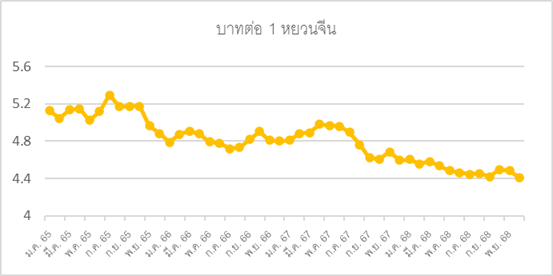
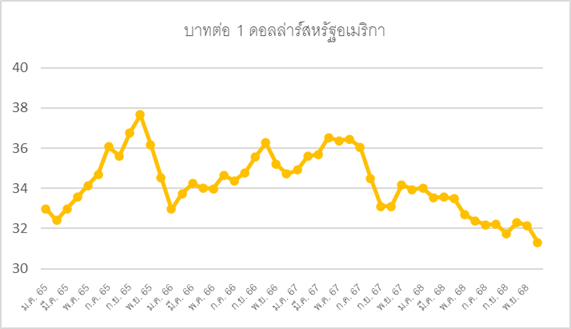
| Risk from exchange rate volatility | From 2022-2025, almost all of the company's revenue from product sales was derived from customers in China. During 2022-2023, the company primarily conducted transactions with customers in China in US dollars. Subsequently, in 2024, Chinese customers negotiated to switch to using Chinese Yuan for all transactions. | The RMB exchange rate is subject to periodic fluctuations stemming from various external factors beyond the Company's control. Should adequate risk management measures not be in place, the Company may incur losses, which could significantly impact its operating results and financial position. | The Company recognizes this risk and has therefore established guidelines for hedging against foreign exchange rate fluctuations to manage exchange rate risk to an acceptable level, without aiming to generate profit from exchange rates. This involves adapting risk management methods to suit changing business conditions and environments. The risk management methods specified in the guidelines include:
Table showing the exchange rate of Thai Baht per 1 Chinese Yuan during January 1, 2022 – December 31, 2025. Source: Bank of Thailand Table showing the exchange rate of Thai Baht per 1 US Dollar during January 1, 2022 – December 31, 2025. From the figure above, over the past 4 years, the exchange rates of Thai Baht against the US Dollar and Chinese Yuan have tended to fluctuate in the same direction. From Q3 2024 to the present, the Company has entered into Forward Contracts for 100% of all Chinese Yuan transactions due to the high volatility of the Yuan. However, in the past, the Company has not experienced significant negative impacts on its revenue and profit due to exchange rate fluctuations. | 764 · Description: Fluctuation in exchange rates, interest rates, or the inflation rate · Info category: FINANCIAL_RISK | |||||||||||||||||||||||||||||||||||||||||||||||||||||||||||||||||||||||||||||||||||||||||||
| Risk of securing sufficient investment for the production capacity expansion plan. | Over the past three years, the company has experienced significant growth. Customer and consumer groups in China continue to demand the company's main fruit products, such as durian and longan, in continuously increasing quantities. In 2025, the company's total sales revenue was 2,521.3 million Baht. For 2026, the company aims to increase production capacity to achieve sales revenue of no less than 4,064.0 million Baht. However, achieving this goal will require sufficient funding. | If funding is inadequate, it may impact liquidity and cause the company's revenue and profit to deviate from the plan. |
| 761 · Description: Insufficient sources of funding · Info category: FINANCIAL_RISK | |||||||||||||||||||||||||||||||||||||||||||||||||||||||||||||||||||||||||||||||||||||||||||
| Interest Rate Risk | As of the end of 2023-2025, the Company had total borrowings from financial institutions of 62.7 million baht, 115.9 million baht, and 162.0 million baht, respectively. The cost of borrowings from financial institutions is mostly determined by floating interest rates. During 2023-2025, the Monetary Policy Committee (MPC) announced several interest rate hikes. The MPC meeting dates where interest rates were changed are as follows:
By the end of Q3 2025, interest rates are expected to be on a downward trend, which will positively impact the Company. The Company continues to be able to pay interest and principal on schedule. Furthermore, the Company maintains good relationships with financial institutions, resulting in access to most credit lines with loan interest rates lower than the MLR. In 2026, the Company anticipates continuing to receive favorable interest rates with a downward trend due to the MPC's policy announcements. | An increase in interest rates would lead to higher borrowing costs, consequently reducing the company's profitability. | Once the company has offered shares to the public and listed them on the stock exchange, it will utilize a portion of the capital raised to repay existing loans, thereby reducing interest expenses. Furthermore, upon receiving payments for goods from customers, the company will proceed to settle both the interest and principal of its export loans (Packing Credit) to further mitigate interest costs. | 764 · Description: Fluctuation in exchange rates, interest rates, or the inflation rate · Info category: FINANCIAL_RISK | |||||||||||||||||||||||||||||||||||||||||||||||||||||||||||||||||||||||||||||||||||||||||||
| Risk of financial illiquidity if debtors are unable to pay as scheduled. | This risk arises from the Company extending trade credit to customers for product orders but being unable to collect payment for the goods within the agreed-upon period. This may be due to economic fluctuations in the destination country, the customer's own financial liquidity issues, or disputes regarding the quality of fresh fruit upon delivery to the destination, leading customers to delay or refuse payment. | If debtors encounter problems and are unable to repay their debts, this may affect the company's liquidity and significantly negatively impact its revenue and profit. Should lawsuits arise, they could affect the company's reputation. However, the company has never experienced a situation where it was unable to collect debts from its debtors. |
| 734 · Description: Reliance on large customers or few customers · Info category: STRATEGIC_RISK | |||||||||||||||||||||||||||||||||||||||||||||||||||||||||||||||||||||||||||||||||||||||||||
| Risks from changes in government policies and related government agencies in partner countries and Thailand. | International trade currently focuses primarily on free market trade. The World Trade Organization has established trade measures and standards, which each country has adapted to suit its own economic conditions. On many occasions, loopholes in these measures are exploited to benefit their own countries. As every country seeks to gain an advantage over its trading partners, trade barriers arise. Such barriers are not necessarily limited to tariffs; they can also be non-tariff trade barriers (Non-Tariff Barriers), such as various quality control measures. If a partner country of the Company implements policies that create obstacles, the Company's business operations may falter or cease, thereby impacting its performance and liquidity. Currently, however, China does not impose restrictive measures or create obstacles for fruit exporters from Thailand. Thailand is permitted to import over 22 types of fruits, which is more than neighboring countries that cultivate and export similar fruits. China places great importance on the safety and quality of agricultural and food products. Therefore, various Memoranda of Understanding and Protocols have been signed between China and Thailand, as follows:
<5RNYbGiZGTS4>
|
|
| 756 · Description: Change in laws and regulations · Info category: COMPLIANCE_RISK |
Risks to Securities Holders' Investment
Risk Register
| Risk Name | Risk Characteristics | Consequences | Management Measures | Related Risk Factors |
|---|---|---|---|---|
| The risk that investors' opportunity to subscribe for new shares offered in the future may be limited. | Although public companies in Thailand are not obligated to offer pre-emptive rights for new securities to existing shareholders when new securities are issued and offered for sale, public companies in Thailand may, from time to time, offer newly issued securities through a rights offering to existing shareholders in proportion to their shareholding (Rights Offering) or a preferential public offering to existing shareholders in proportion to their shareholding, excluding those shareholders whose participation would subject the Company to obligations under foreign laws (Preferential Public Offering). However, the Company may be restricted by legal provisions from offering pre-emptive rights for new securities or conducting a preferential public offering to existing shareholders in proportion to their shareholding, excluding those shareholders whose participation would subject the Company to obligations under foreign laws (Preferential Public Offering), or any similar actions in certain countries, unless the Company has completed the prescribed procedures. In the event that the Company offers or is required to offer newly issued ordinary shares to existing shareholders or grants any rights in any form, the Company shall have the discretion to undertake the necessary steps to provide such rights to the shareholders. However, in granting such rights or undertaking similar actions, the Company may not offer such rights to shareholders residing outside Thailand. For instance, the Company will not be permitted to offer such rights to U.S. persons unless (a) a registration statement under U.S. securities laws has become effective, or (b) such offer of pre-emptive rights for new securities or the offer of pre-emptive rights for underlying securities to such investors is exempt from registration under U.S. securities laws. Consequently, compliance with securities laws or other regulatory requirements in certain countries may prevent some groups of investors from acquiring such newly issued rights, which, in such cases, may result in a dilution of their shareholding proportion. The Company shall not be obligated to file for registration of its ordinary shares in any country to enable foreign investors to exercise their rights to purchase newly issued ordinary shares proportionally in the future. | may impact the Company's ability to complete the issuance and offering of additional shares within a reasonable timeframe, or may render it unable to raise capital under terms most beneficial to the organization. |
| 769 · Other name: The risk that investors' opportunity to subscribe for new shares offered in the future may be limited. · Description: Other · Info category: HOLDER_RISK |