

Business Operation · 2025
In this section22 topics
- Corporate Information4 items
- Dividend Policy2 items
- Major Shareholders2 items
- Business Strategies Overview5 items
- Material Changes & Developments1 item
- Use of Proceeds from Securities Offerings2 items
- Commitments Made in the Registration Statement2 items
- Group Operating-Structure Policy1 item
- Companies Where the Company Holds ≥10%1 item
- Shareholders with Potential Conflict of Interest1 item
- Relationships Among Major Shareholders1 item
- Shareholders' Agreement1 item
- Shareholding Diagram (Group Structure)3 items
- Income Structure3 items
- Product / Service Characteristics3 items
- Research & Development5 items
- Assets Used in the Business3 items
- Marketing Policy & Competition3 items
- Procurement of Products & Services6 items
- Projects Under Construction1 item
- Debentures & Bills of Exchange1 item
- Convertible Securities1 item
Corporate Information
Company Name
NTF INTERGROUP (THAILAND) PUBLIC COMPANY LIMITED
Telephone
08-0954-9955
Website
www.ntfintergroup.com
comsec@ntfintergroup.com
Dividend Policy
Dividend Policy
The Company and its subsidiaries have a dividend payment policy of not less than 40% of net profit after corporate income tax and all types of reserves as stipulated by law and the Company's regulations. However, dividend payments may be subject to change depending on the operating results, financial liquidity, the necessity of using working capital for business operations, and the Company's future expansion plans, as deemed appropriate by the Board of Directors. Annual dividend payments must be approved by the shareholders' meeting, except for interim dividend payments, which the Board of Directors may approve from time to time when it considers that the Company and its subsidiaries have profits and that such payments will not adversely affect the performance of the Company and its subsidiaries. The interim dividend payments shall be reported to the shareholders' meeting for acknowledgment at the next occasion. Furthermore, according to the Public Limited Company Act, dividends cannot be paid from any funds other than profits. Therefore, if the Company has accumulated losses, no dividends shall be paid.
Historical Dividend Payments
| This Year | Last Year | 2 Years Ago | Metric | Description |
|---|---|---|---|---|
| 1.6 | 0.46 | 2.03 | Net profit per share (Baht : Share) | Net profit per share (baht : share) |
| 1.6 | 0.55 | 0.86 | Dividend per share (Baht : Share) | Dividend per share (baht : share) |
| 0 | 0 | 0 | Dividend stock ratio (Number of original shares: dividend shares) | Ratio of stock dividend payment (existing share : stock dividend) |
| 0 | 0 | 0 | Dividend share value per share (Baht : Share) | Value of stock dividend per share (baht : share) |
| 23.06 | 76.51 | 12 | Total dividend payment value (Baht : Share) | Total dividend payment (baht : share) |
| 100.43 | 119.35 | 53.05 | Dividend payout ratio to net profit (%) | Dividend payout ratio compared to net profit (%) |
Business Strategies Overview
Chairman's Message
Dear Shareholders,
The year 2026 marks a new beginning for NTF Intergroup (Thailand) Public Company Limited as a listed company on the MAI stock exchange. The objective of the fundraising is to invest in machinery, equipment, and provide working capital to support business expansion under the long-term goal of becoming a leader in elevating agriculture to an agricultural industry. The fundraising was highly successful. On behalf of the Board of Directors, I would like to express our sincere gratitude to everyone who has consistently placed their trust in and supported the company's operations. The Board of Directors recognizes its role and responsibility in overseeing the company's operations in accordance with good governance, transparency, and accountability, to build confidence and maximize benefits for shareholders and all stakeholders. Throughout the past period, the company has operated with a commitment to being an exporter of quality fresh fruits from Thailand to international markets, emphasizing quality control in every process from upstream to downstream, efficient supply chain management, and maintaining international operational standards to meet market demands and enhance long-term competitiveness. The Board of Directors has closely supervised the operations of the management, focusing on strategic planning that aligns with changing economic and industrial environments, coupled with prudent risk management, strengthening internal control systems, and developing a robust and sustainable organizational structure.
(Mr. Sumet Chantarasuriyarat)
Chairman of the Board
Message from the Chief Executive Officer
Dear Shareholders,
The past year has been a year of pride and a significant step for NTF Intergroup (Thailand) Public Company Limited, or NTF, with its successful official listing on the MAI stock exchange. This marks a crucial step in enhancing the organization's potential and building a stable foundation for long-term growth amidst a volatile global economic environment and intensifying competition. This success reflects the strength of our business model, the organization's strategic vision, and the confidence that shareholders and business partners have in NTF. Throughout the past year, the company has continuously expanded its growth, especially in the Chinese market, which is a key strategic market for the Thai fruit industry. NTF focuses on strengthening its brand and elevating operational standards in all dimensions, from selecting raw materials from quality cultivation sources, developing sorting, packing, and processing procedures, to integrating modern technology and innovation to enhance production efficiency. This ensures that every product delivered to the global market maintains its quality, freshness, and international standards. Concurrently, the company has prioritized developing a network of cooperation with farmers and packing houses in key cultivation areas nationwide to create an efficient, transparent, and appropriately risk-managed supply chain system. This cooperation not only strengthens the company's business but also plays a vital role in elevating the potential of Thai farmers and adding value to the overall Thai fruit industry.
NTF believes that business growth must go hand in hand with sustainability. Therefore, the company is committed to operating under the framework of sustainable development (ESG), emphasizing efficient resource management, environmental care, promoting the quality of life for farmers and communities, as well as developing the potential of personnel within the organization. This is coupled with conducting business under the principles of good governance, transparency, and sound corporate governance to build confidence among all stakeholders. For the future direction, NTF remains committed to elevating the organization to become one of the leaders in exporting premium Thai fruits to the global market through market expansion, diversified product development, and the creation of strategic collaborations with international business partners to enhance competitiveness and achieve stable long-term growth.
On behalf of the Chief Executive Officer, I would like to express my gratitude to all shareholders, customers, business partners, farmer partners, and all stakeholders for their continued trust and support of the company. I also extend my thanks to all executives and employees for their dedication and commitment in driving the organization forward. I firmly believe that with the collaborative power from all sectors, NTF will be able to move forward steadily and strongly, becoming a significant force in elevating the potential of the Thai fruit industry onto the global stage, while also creating sustainable value and returns for shareholders and society in the long term.
(Mr. Wichai Siramanakul)
Chief Executive Officer
Vision
"A leader in elevating agriculture to an agro-industry, establishing standards, and meeting the demands of global consumers."
Objectives
The company has established 5 key missions as guidelines for its operations, as follows:
-
Supply Chain Development (Supply Chain Development) We will be part of developing and supporting a complete supply chain by prioritizing the quality of products and services.
-
Innovative Manufacturing (Innovative Manufacturing) We will promote the use of technology and innovation to enhance production efficiency.
-
Trust Building (Building Trust) We will build trust and good relationships both within and outside the organization.
-
Social and Environmental Awareness (Social and Environmental Awareness) We will support local communities, raise awareness, and be socially and environmentally responsible.
-
Sustainable Development (Sustainable Development) We will develop continuously and sustainably.
Goals
The Company has set targets for sustainable growth and business development as follows:
-
Focus on ensuring income stability and expanding market reach.
through forward contracts with customers to secure the volume of key fruit produce for distribution (e.g., durian, fragrant coconut, longan, and mangosteen), coupled with leveraging joint ventures to penetrate secondary markets and the mass market customer segment to increase broad market share.
-
Focus on supply chain management and diversification of production risks.
by setting a strategy to source 15% of the total volume of produce from abroad (e.g., importing durian from Vietnam) to manage risks from domestic production volume fluctuations and enhance the ability to consistently deliver produce, as well as adjusting the proportion of fresh and frozen fruit products to deliver high-quality produce and extend shelf life (e.g., frozen durian) to expand the customer base in high-purchasing power international markets such as the United States.
-
Elevate operational performance and quality control.
by applying advanced technologies such as CT Scan machines and sorting machines for 100% accurate internal quality inspection of fruits, along with expanding and increasing the number of packing houses both domestically and internationally to support growth.
-
Develop and diversify the product portfolio.
by conducting market trials for new fruit varieties, namely blueberries and kiwis, to study consumer demand and assess the feasibility of developing them into new businesses (New S-Curve) to create long-term growth.
-
Implement good corporate governance practices.
Strive for ethical growth by aiming to achieve certification as a member of the Private Sector Collective Action Coalition Against Corruption (CAC), increasing the proportion of female directors on the board to 30%, and integrating succession planning into the organizational strategy.
-
Strive towards environmentally responsible business operations.
with the goal of reducing greenhouse gas emissions to 2.65 by 2028 through the project to convert the organization's vehicles to electric systems (EV/HEV) and adjusting driving behavior to increase fuel efficiency.
-
Achieve strong financial targets.
by driving sales to achieve targets by 2028 while maintaining a stable Debt-to-Equity Ratio (D/E Ratio).
Business Strategies
The Company defines its business strategies by focusing on achieving quality growth alongside efficient cost and risk management. This is achieved through the development of a flexible business structure that can accommodate long-term expansion and build sustainable competitiveness. The details are as follows:
-
Marketing Strategy
The Company continuously strives to develop and elevate its brand to reflect quality standards and premium product status. It has registered trademarks in both Thailand and the People's Republic of China to build confidence among customers in international markets. The Company emphasizes establishing consistent product and service standards across all markets, while also enhancing brand recognition as a high-quality fresh fruit distributor. This involves focusing on adding value to products and expanding the customer base in potential markets, which are crucial factors in supporting continuous revenue growth.
-
Procurement Strategy
The Company prioritizes quality and safety control of products at every stage by focusing on selecting fruit packing house partners that meet standards and regularly conducting product quality inspections, including sending samples for residue testing through certified agencies both domestically and internationally, to comply with customer requirements. The Company manages product procurement to align with market demands in terms of both quantity and quality. It also has a strategy to expand product categories to increase business opportunities and reduce revenue volatility. Furthermore, the Company utilizes customer feedback to continuously improve product quality and production processes, which helps elevate product standards and support the Company's profitability.
-
Partner Relationship Management Strategy
The Company aims to build stable and sustainable relationships with partners in the supply chain by prioritizing accurate, clear, and transparent communication of information, such as purchasing plans, product quantities, and acquisition prices, to foster mutual understanding and reduce operational risks. Furthermore, the Company has a team that closely coordinates with partners to ensure continuous and efficient procurement and delivery of goods, which strengthens the stability of the supply chain and supports long-term business expansion.
-
Human Resources Strategy
The Company prioritizes human resource development as a crucial factor in driving the organization, focusing on enhancing knowledge in business, quality control, and internal collaboration. The Company promotes a work environment conducive to employee efficiency and engagement, while also emphasizing employee health and welfare, to support organizational growth and enhance long-term competitiveness.
-
Funding Source Management Strategy
The Company prioritizes prudent management of liquidity and capital structure, as the nature of its business requires a high level of working capital for procurement. The Company closely plans and monitors cash flow, with regular coordination among relevant departments to ensure appropriate liquidity management and support business growth. Furthermore, the Company has strategies for securing funding from both financial institutions and capital markets to strengthen its financial position and enhance its capacity to seize future business opportunities.
In the past year, at the Board of Directors Meeting No. 6/2568 on November 14, 2568, a resolution was passed to review the vision, objectives, and goals. Additionally, a mechanism was established to concretely monitor the implementation of strategies, requiring management to report operational results and progress according to the strategic plan at Board of Directors meetings quarterly (at least 4 times per year). This is to evaluate achievements and control operations to meet targets, enabling timely strategic adjustments in response to competitive situations and ensuring that the Company can achieve its defined sustainable growth objectives.
Material Changes & Developments
Material Changes & Developments
| Year | Description |
|---|---|
| 2,020 |
|
| 2,021 |
|
| 2,022 |
|
| 2,023 |
|
| 2,024 |
|
| 2,025 |
|
| 2,026 |
|
Use of Proceeds from Securities Offerings
Is There Money Raised from a Securities Offering Still to Report On?
Yes
Offerings
| Type of Securities | Amount Raised Given As | Amount Raised (Million Baht) | Uses of the Money | Used as Declared? | Progress / Reasons and Measures if Not Used as Declared | Related Link | |
|---|---|---|---|---|---|---|---|
| Equity Instruments | 2873 | 341.6 | 2027-12 · Objective: Invest in production tools and equipment · Period type: 2871 · Start period: 2027-12 · Spent amount type: 2873 · Start spent amount: 2200000.0 · Expected amount type: 2873 · Start expected amount range: 120000000.0 · 2026-01 · Objective: Working Capital within the Business · Period type: 2871 · Start period: 2026-01 · Spent amount type: 2873 · Start spent amount: 171600000.0 · Expected amount type: 2873 · Start expected amount range: 171600000.0 · 2027-12 · Objective: Partial repayment of bank loans · Period type: 2871 · Start period: 2027-12 · Spent amount type: 2873 · Start spent amount: 50000000.0 · Expected amount type: 2873 · Start expected amount range: 50000000.0 | Y |
| https://www.set.or.th/th/market/news-and-alert/newsdetails?id=102316301&symbol=NTF |
Commitments Made in the Registration Statement
Are There Commitments or Conditions from an Offering or Listing?
Yes
Commitments and How They Were Met
The Company recognizes the importance of liquidity management and risk control related to advance payments to business partners. To fulfill the commitments made prior to listing on the stock exchange, the Company has revised its policies and strictly implemented control measures, with the following operational details:
1. Management of Advance Payments for Goods under Fruit Purchase Agreements (Contract Deposits): As the payment of contract deposits to packing houses (under exclusive agreements with a minimum duration of 1 year) is a significant item relative to total assets, the Company has fully implemented risk control measures. These include on-site inspections of packing houses and durian orchards in advance, trial orders of at least 3 purchase orders to assess quality, consideration and approval of deposit limits not exceeding 20% of the remaining production order value based on stringent supporting documents, and continuous monitoring of fund utilization and fruit delivery plans.
Results of Commitment Fulfillment The Company has fulfilled its commitments regarding contract term adjustments and inspections, as follows:
-
Before engaging a packing house, the Company sent officers to visit the packing house and inspect various licenses and quality certifications of the packing house and partner durian orchards to ensure that all required documents, as stipulated by relevant authorities, were complete before commencing engagement.
-
Trial Purchase Period: The Company conducted trial orders of at least 3 purchase orders from new packing houses to assess and ensure quality before considering entering into a fruit purchase agreement.
-
Entering into Fruit Purchase Agreements: For packing houses that meet quality criteria, the Company has entered into exclusive fruit purchase agreements with a minimum duration of 1 year. The total contract deposit limit is controlled not to exceed 20% of the remaining value of goods ordered for production.
-
Consideration for Contract Deposits: Management jointly reviewed and approved contract deposits based on the assessment results of the packing houses, considering financial statements, experience, and liquidity. Contract deposits are categorized into long-term and short-term, and disbursements are progressively made based on the remaining production order value, strictly adhering to complete supporting documents (e.g., application forms, orchard evaluation results by the Company's QC, contracts with growers, and transfer slips).
-
Monitoring: The Company's fruit procurement officers regularly communicate with packing houses to verify that funds are used for their intended purposes and to monitor fruit conditions for scheduling harvesting and delivery to the Company.
-
Repayment of Contract Deposits and Post-Listing Commitments: For the repayment of long-term deposits, the Company has progressively deducted repayments per container and ensured that the remaining balance is repaid within 365 days or upon contract termination. For short-term deposits, the financial accounting department has prepared a control schedule to prevent overdue payments, confirming balances quarterly and reporting to the Executive Committee monthly.
-
Adjustment of Fruit Purchase Agreement Terms (Effective 2026): The Company has successfully revised its Master Agreement, stipulating that long-term contract deposits shall be progressively repaid per container. In cases where a remaining deposit balance exists after progressive repayments per container, it shall be repaid within 120 days from the date the packing house received the long-term contract deposit or upon the end of the production season (whichever comes first), as specified in the agreement. Furthermore, the Company calculates the deduction of long-term contract deposits from the value of new goods per container according to the Company's policy. Currently, packing houses have signed the Master Agreement to ensure compliance with the committed terms.
-
Internal Audit: The Company has assigned its internal audit department to inspect and monitor compliance with processes related to contract deposits, which will be part of the audit of the procurement process for finished goods for sale and payment disbursements, according to the audit plan for Q2 2026. The internal audit department will report the audit results to the Audit Committee meeting during the Q2 2026 financial statement meeting cycle (August 2026).
-
Monitoring by Financial Advisor: The financial advisor monitored the Company's performance during Q4 2025 and found that the Company had fully complied with the established policies and procedures. The financial advisor reported the monitoring results to the Audit Committee and the Board of Directors during the meeting to consider the 2025 annual financial statements. The financial advisor will continue to monitor the Company's performance and disclosure of information, including reporting to the Audit Committee and the Board of Directors during quarterly financial statement meetings. This monitoring will continue strictly for a period of 1 year from the date the Company was listed on the stock exchange, as committed.
-
In cases where a packing house fails to supply fruits in the quantity and quality specified in the contract, the Company has clearly stipulated conditions in the agreement, requiring the packing house to refund the deposit after deducting actual production preparation costs incurred by the Company.
2. Management of Advance Payments for Goods For advance payments for fruits to be delivered, the Company has strictly implemented the prescribed risk control measures.
Results of Commitment Fulfillment
-
Disbursement Control: The Company approves advance payments based on the packing house's advance production plan, covering no more than approximately 80% of the goods' value (referenced to market price on the billing date). The remaining payment for goods will only be processed upon the complete packing of goods into containers.
-
Status Monitoring The Company has a system for regularly monitoring the status of such advance payments for goods to prevent the risk of losing advance payments.
Group Operating-Structure Policy
Description
NTF Intergroup (Thailand) Public Company Limited ("the Company") has clearly defined the Group's structure and policies for dividing business roles to ensure agile management, enhance operational efficiency, reduce business redundancy, and prevent conflicts of interest. This structure focuses on systematically connecting the supply chain from upstream to downstream, enabling each business unit to perform its duties efficiently and support the Group's long-term growth.
-
Role of the Parent Company
As the parent company, the Company serves as the core of the Group's operations, focusing on the distribution of fresh fruits and related products both domestically and internationally, while also overseeing product quality standards to meet market requirements and international standards. Furthermore, the Company plays a role in setting the Group's policies, direction, strategies, and vision, as well as managing customer relationships to continuously drive revenue and create value for shareholders.
-
Investment Structure through a Holding Company
To support business expansion and increase investment opportunities, the Company established NTF Holding Co., Ltd., a subsidiary in which the Company holds a 99.97% stake. This subsidiary serves as the primary unit for managing the Group's investments. Its role is to evaluate and execute investments in businesses with potential that align with the Group's growth direction, with the objective of creating new revenue streams, diversifying risks, and enhancing long-term enterprise value. The scope of its operations has been clearly defined to avoid redundancy and prevent competition with the parent company's core business.
-
Development of upstream and midstream businesses through strategic partnerships
The Company has a policy to strengthen its supply chain by focusing on developing and connecting upstream and midstream businesses through joint ventures with specialized partners. Sak Siam Inter Fruits Co., Ltd. is responsible for sourcing produce directly from cultivation areas to ensure high-quality and continuous raw material supply. NTF Holding Co., Ltd. has invested in Puean Chao Suan Thai Co., Ltd., which specializes in fruit packing houses, to enhance its sorting and packaging capabilities. This operational approach allows the Company to manage product quality from the source, increase the stability of raw material supply, and improve the overall efficiency of its operational processes.
-
Value Creation and Competitiveness of the Group
The Group's business operating structure enables the Company to efficiently manage its supply chain and provides flexibility in business expansion without relying on large asset investments. At the same time, this structure also supports the generation of diverse income streams, adds value to products, and maintains profitability, which are crucial factors in enhancing the Group's long-term competitiveness.
Companies Where the Company Holds ≥10%
Companies (≥10% Holding)
| Company Name | Address | Province | Zip Code | Telephone | Business Type | Security Type | Shares | Paid-up Shares |
|---|---|---|---|---|---|---|---|---|
| NTF Holding Company Limited | No. 195, One Bangkok Tower 4, Room No. 1211-1213, 12th Floor, Wireless Road, Lumpini Sub-district, Pathum Wan District | Bangkok | 10330 | 082 849 2445 | To engage in investment or co-investment in businesses related to agriculture, import, export of fruits, frozen fruits, and processed fruits. | Common shares | 7,000,000 | 7,000,000 |
Income Structure
Product / Service Income
| Category | Description | This Year | This Year % | Last Year | Last Year % | 2 Years Ago | 2 Years Ago % |
|---|---|---|---|---|---|---|---|
| Total revenue from operations | Total revenue from operations | 2,521,268.54 | 100 | 1,114,737.7 | 100 | 562,508.41 | 100 |
| Durian | 2,398,386.26 | 95.13 | 1,018,135.62 | 91.33 | 461,829.59 | 82.1 | |
| Longan | 53,568.37 | 2.12 | 50,899.37 | 4.57 | 67,396.86 | 11.98 | |
| Frozen Durian / Shelled Pulp | 14,127.68 | 0.56 | 27,636.57 | 2.48 | 32,805.75 | 5.83 | |
| Longkong | 0 | 0 | 0 | 0 | 309.22 | 0.05 | |
| Rose apple | 0 | 0 | 530.84 | 0.05 | 166.99 | 0.03 | |
| Coconut | 55,186.23 | 2.19 | 17,535.3 | 1.57 | 0 | 0 | |
| Other | Others | 0 | 0 | 0 | 0 | 0 | 0 |
Export Income
| Category | Description | This Year | This Year % | Last Year | Last Year % | 2 Years Ago | 2 Years Ago % |
|---|---|---|---|---|---|---|---|
| Total revenue | Total revenue | 2,521,268.54 | 100 | 1,114,737.7 | 100 | 562,508.41 | 100 |
| Domestic | Domestic | 59.2 | 0 | 27,675.09 | 2.48 | 33,503.39 | 5.96 |
| International | International | 2,521,209.34 | 100 | 1,087,062.61 | 97.52 | 529,005.02 | 94.04 |
Other Income
| Operating Other Income | Non-Operating Other Income | Share of Profit |
|---|---|---|
| 1710 · As of year: 18892.81 · Description: Total other income · As of yesteryear: 3773.41 · As of year before yesteryear: 808.57 · 1711 · As of year: 0.0 · Description: Other income from operations · As of yesteryear: 0.0 · As of year before yesteryear: 0.0 | 1712 · As of year: 18892.81 · Description: Other income not from operations · As of yesteryear: 3773.41 · As of year before yesteryear: 808.57 | 1713 · As of year: 0.0 · Description: Share of profit · As of yesteryear: 0.0 · As of year before yesteryear: 0.0 |
Product / Service Characteristics
Introduction
The Company operates a business distributing premium selected fresh fruits for both export and domestic distribution, focusing on adding value to products through stringent selection and quality control at every stage to ensure products meet standards and satisfy the demands of the premium market.
The Company's fruits are distinguished by their quality, in terms of both taste and external appearance, such as weight, size, peel integrity, and fruit color. The Company has a quality control system that ensures product consistency, which is a crucial factor in building customer confidence and supporting the Company's profitability.
The Company's main products include durian, longan, coconut, rose apple, and other fruits, which are sold under both the Company's brands and those of its partner clients. This structure enhances business flexibility and supports market expansion both domestically and internationally.
The Company prioritizes brand management, which is divided into
-
Brands under the Company's license in Thailand and the People's Republic of China include MEILI, TAITINGHAO, MOMANTAI, and MINI, which reflect premium product standards, and
-
Brands developed in collaboration with customers, where the Company holds rights in Thailand and the customer holds rights in the People's Republic of China, include JINYAN and TAIJI, which strengthen business cooperation and increase long-term market expansion opportunities.
Business Type
3114
Business Groups
| Business Group | Description |
|---|---|
| Durian | The fresh durian exported by the company under the NTF brand is primarily of the Mon Thong variety, sourced from quality cultivation areas in Chanthaburi, Rayong, Trat, Sisaket, Buriram, Ubon Ratchathani, Kanchanaburi, Phitsanulok, Uttaradit, Phrae, Sukhothai, Nakhon Si Thammarat, Surat Thani, Ranong, and Chumphon provinces. Each region possesses unique characteristics and distinctiveness reflected in the taste and quality of the durian. The distinctive features of NTF durian include delicious taste, high-quality sweetness, clean fruit, free from fungi and insects, beautifully round shape, complete thorns, no abnormalities in shape, and no blemishes. NTF's fresh durian can be categorized into 3 grades as follows:
|
| Longan | The longans exported under the company's brand are of the E-Dor variety from Chanthaburi and Lamphun. These are high-quality longans with a sweet, juicy, and crisp taste. The fruits are perfectly round and large, with a uniform yellowish-brown peel. |
| Coconut | The coconuts exported under the company's brand are carved aromatic coconuts from Ratchaburi Province. |
Research & Development
Has R&D Policy (Y/N)
No
R&D Cost — Label
Research and development (R&D) expenses over the past 3 years (Million Baht)
R&D Cost — This Year
0.0
R&D Cost — Last Year
0.0
R&D Cost — 2 Years Ago
0.0
Assets Used in the Business
Permanent Assets — Description
Building and Equipment Improvements
As of December 31, 2025, the Company had net building and equipment improvements totaling 10.67 million Baht, primarily consisting of improvements to the One Bangkok office building, machinery, fixtures and fittings, furniture, and office equipment, among others.
Intangible Assets — Description
As of December 31, 2025, the Company had net intangible assets of 0.48 million Baht, consisting of computer software licenses for Microsoft Windows and Microsoft Office.
Right-of-Use Assets
As of December 31, 2025, the Company had net right-of-use assets totaling 22.70 million Baht, primarily consisting of office lease agreements for One Bangkok building and vehicle lease agreements, among others.
Trademark
As of December 31, 2025, the Company Registered 9 trademarks in Thailand and 3 copyrights/trademarks in China.
| No. | Registered Country | Trademark | Class | Expiry Date |
| 1 | Thailand | (NTF) | Class 35 Import and Export Management | January 20, 2033 |
| 2 | Thailand | (Meili) | Class 35 Import and Export Management | January 20, 2033 |
| 3 | Thailand | (Mini) | Class 35 Import and Export Management | January 20, 2033 |
| 4 | Thailand | (Mini) | Class 35 Import and Export Management | January 20, 2033 |
| 5 | Thailand | (Moman Tai) | Class 35 Import and Export Management | January 20, 2033 |
| 6 | Thailand | (Moman Tai) | Class 35 Import and Export Management | January 20, 2033 |
| 7 | Thailand | (Jin Yan) | Class 31 Fresh Durian, Fresh Coconut, Fresh Longan Class 35 Advertising, Business Management, Business Administration, Office Organization | Under consideration by the Department of Intellectual Property. |
| 8 | Thailand | (Tai Ting Hao) | Class 31 Fresh Durian, Fresh Longan, Fresh Coconut | Under consideration by the Department of Intellectual Property. |
| 9 | Thailand | (Taiji) | Class 31 Fresh Durian, Fresh Longan, Fresh Coconut | August 14, 2034 |
| 10 | China | (Meili) | Image Copyright | April 18, 2034 |
| 11 | China | (Mini) | Image Copyright | April 18, 2034 |
| 12 | China | (Tai Ting Hao) Trademark | Class 31 Agricultural Products Class 35 Advertising | February 13, 2034 |




Important Business Licenses
The business of exporting fresh fruits and vegetables to foreign countries requires registration as a fruit and vegetable exporter with the Department of Agriculture for export to specific destination countries. Each country's fruit and vegetable export license specifies various types of fruits that the destination country permits for import from Thailand. Such licenses begin with the abbreviation of the destination country, e.g., China (CNxxxxx), Vietnam (VN-xx-xxx), etc. However, some countries, such as the United States, do not require Thai exporters to register with the Department of Agriculture. Additionally, for certain types of fruits, the Department of Agriculture mandates further registration for exporters outside the Kingdom, such as fresh durian (DU-1-xx-xxx) and fresh longan (LO-2-xx-xxx). Each export shipment also requires a phytosanitary certificate P.K. 11-1 (for longan) and phytosanitary certificates P.K. 7-1 and 7-2 (for fresh fruits) to be attached to the goods until they reach the destination country.
Furthermore, the Ministry of Agriculture and Cooperatives' regulations stipulate that fruit exporters declared as agricultural products subject to mandatory standards, such as longan, durian, and frozen durian, must obtain an agricultural product exporter license according to mandatory standards from the National Bureau of Agricultural Commodity and Food Standards to control food safety.
Office Lease Agreement
As of December 31, 2025, the Company entered into the following sub-lease agreements for office premises, which are recorded as part of right-of-use assets.
| Leased Assets | Office space, One Bangkok Tower 4, 12th Floor, Units 1211 – 1213 |
| Lessor | One Bangkok Tower 4 Co., Ltd. |
| Lessee | NTF |
| Leased Area | 396 square meters |
| Lease Term | 3 years (contract start date November 1, 2025 – October 31, 2028) |
Lease Agreement for Sub-leasing Premises to Fruit Packing Houses
The Company leases premises to provide sub-leasing of premises and equipment to contracted packing houses (Longs). The Company chooses to lease premises in close proximity to reduce travel time for quality control and purchasing staff who must travel to each packing house for quality inspection.
The Company gradually recognizes the lease value as an expense in the income statement throughout the lease term.
| Leased Premises 1 | Packing house No. 55/17, Wangtako Subdistrict, Langsuan District, Chumphon Province |
| Lessor | Legal Entity |
| Lessee | NTF |
| Objective | Fruit Packing House |
| Lease Term | 1 year (contract start date June 11, 2025 – June 10, 2026) |
| Leased Premises 2 | Packing house No. 10/6, Nakha Subdistrict, Langsuan District, Chumphon Province |
| Lessor | Legal Entity |
| Lessee | NTF |
| Objective | Fruit Packing House |
| Lease Term | 1 year (contract start date June 11, 2025 – June 10, 2026) |
| Leased Premises 3 | Packing house No. 55/11, Wangtako Subdistrict, Langsuan District, Chumphon Province |
| Lessor | Legal Entity |
| Lessee | NTF |
| Objective | Fruit Packing House |
| Lease Term | 1 year (contract start date June 24, 2025 – June 23, 2026) |
| Leased Premises 4 | Packing house No. 69/3, Khao Wua Subdistrict, Tha Mai District, Chanthaburi Province |
| Lessor | Legal Entity |
| Lessee | NTF |
| Objective | Fruit Packing House |
| Lease Term | 1 year (contract start date January 1, 2026 – October 31, 2026) |
2.5.8 Sub-lease Agreement for Premises (Packing House)
| Leased Premises 1 | Packing house No. 55/17, Wangtako Subdistrict, Langsuan District, Chumphon Province |
| Sub-lessor | NTF |
| Sub-lessee | Fruit Packing House No. 2 |
| Objective | Engages in the business of sourcing, sorting, preparing, and packing fruit products for export to sub-lessees under fruit export purchase agreements (fresh durian). |
| Lease Term | 9 Months (July 1, 2025 – March 31, 2026) |
| Leased Premises 2 | Packing house No. 10/6, Nakha Subdistrict, Langsuan District, Chumphon Province |
| Sub-lessor | NTF |
| Sub-lessee | Fruit Packing House No. 1 |
| Objective | Engages in the business of sourcing, sorting, preparing, and packing fruit products for export to sub-lessees under fruit export purchase agreements (fresh durian). |
| Lease Term | 9 Months (July 1, 2025 – March 31, 2026) |
| Leased Premises 3 | Packing house No. 55/11, Wangtako Subdistrict, Langsuan District, Chumphon Province |
| Sub-lessor | NTF |
| Sub-lessee | Fruit Packing House No. 3 |
| Objective | Engages in the business of sourcing, sorting, preparing, and packing fruit products for export to sub-lessees under fruit export purchase agreements (fresh durian). |
| Lease Term | 9 Months (July 1, 2025 – March 31, 2026) |
Insurance Policy
| No. | Insurer | Type of Insurance | Beneficiary | Insured Property | Insured Capital (Baht) | Coverage Period |
| 1 | Indara Insurance Public Company Limited |
| NTF | 195 One Bangkok Tower 4, 12th Floor, Rooms 1211-1213, Wireless Road, Lumpini Subdistrict, Pathum Wan District, Bangkok 10330 |
| September 22, 2025 – September 22, 2026 |
Note: Insured capital covers 100% of fixed asset risks, calculated from the value of fixed assets at the end of 2025.
Loan Agreement
As of December 31, 2025, the Company had credit lines and outstanding loan liabilities as follows. The Company has no credit conditions requiring a Financial Covenant.
| Lender | Loan Type | Credit Limit (Million Baht) | As of Dec 31, 2025 Outstanding Loans (Million Baht) | Interest Rate Per annum (%) | Collateral / Guarantee | Note |
| KBANK |
| 156.00 6.50 219.34 | 97.60 - 213.83 | As per requirements and FD+2.0% |
| The bank will begin considering the cancellation of guarantees by the directors and the directors' assets once NTF has been successfully registered on mai. |
| SME |
| 5.00 | - | MLR+1% |
| The bank will begin considering the cancellation of guarantees by the directors once NTF has been successfully registered on mai. |
| SCB |
| 210.00 200.00 | 64.44 194.28 | As specified |
| The bank will begin considering the cancellation of guarantees by the directors once NTF has been successfully registered on mai. |
| Total Short-term Loans | 395.50 | 263.41 | ||||
| Total Foreign Exchange Contracts | 428.09 | 408.11 | ||||
Has Subsidiaries Investment Policy (Y/N)
No
Marketing Policy & Competition
Reporting Mode
3117
Marketing Policy (Overall)
The Company defines its marketing and business development strategies by focusing on expanding its customer base in potential markets, coupled with building long-term relationships, developing quality products, and efficiently managing pricing, all to support the Company's long-term revenue growth and profitability. Details are as follows:
-
Customer Acquisition Strategy
The Company continuously expands its customer base by participating in international trade fairs and promotional activities in target markets, such as food and fruit exhibitions in both Thailand and the People's Republic of China, as well as engaging in agricultural product promotion activities organized by government agencies. Furthermore, the Company emphasizes building business networks with importers, wholesalers, and operators in destination markets to increase opportunities for reaching new customers and continuously support the growth of international sales.
-
Customer Relationship Management Strategy
The Company focuses on maintaining long-term customer relationships by prioritizing the delivery of quality products that meet agreed quantities and timelines, thereby building trust and confidence with partners. The Company has a dedicated team that closely supports customers, covering coordination before sales, during product delivery, and providing after-sales service in case of product issues, to ensure efficient operations and continuously enhance customer satisfaction.
-
Product Strategy
The Company aims to offer high-quality, standard-compliant premium fresh fruits, distinguished by their taste, freshness, appearance, and product safety. The Company implements stringent quality control through a quality inspection team that works closely with fruit packing houses at every stage, including sending samples for residue testing through certified agencies in both Thailand and the People's Republic of China, to ensure products comply with destination market requirements. This approach enables the Company to maintain product standards and create market differentiation, which are crucial factors in supporting the Company's growth and profitability.
-
Brand Building Strategy
The Company prioritizes the development of product brands and packaging, collaborating with customers on designs that align with consumer behavior and needs in each region. The Company manages a diverse portfolio of brands to cater to different regional markets, with each brand having a clear market positioning, which enhances product recognition and creates market differentiation. Additionally, the Company has registered trademarks in both Thailand and the People's Republic of China to protect intellectual property rights and build confidence among customers in international markets.
-
Pricing Strategy
The Company employs a cost-plus pricing policy, setting appropriate minimum gross profit margins for each product type. This is determined by considering raw material costs, production costs, and shipping expenses, which are adjusted according to supply and demand conditions at different times. The Company manages price risks by avoiding long-term forward contracts to reduce cost volatility and maintain stable gross profit margins, which is a crucial factor in supporting the Company's long-term profitability.
Industry & Competition (Overall)
The Company operates in the premium fresh fruit export industry, which is one of the agricultural products with high demand in international markets, particularly the People's Republic of China. In 2025, Thailand's total durian export volume was approximately 0.94 million tons, valued at approximately 150,160 million Baht. The Company's export share accounted for approximately 1.42% in terms of volume and 1.60% in terms of value.
Thailand's durian exports primarily target the People's Republic of China. In terms of competition, Thailand remains a major exporter. However, competition has increased from other producing countries, namely Vietnam, which accounts for approximately 50.40% of China's imports, while Thailand accounts for 49.30%. Other countries such as Malaysia and the Lao People's Democratic Republic hold smaller proportions.
Under such competitive conditions, the Company focuses on competing in the premium product market by leveraging product quality control, consistency in delivery, and the ability to meet customer demands. These are crucial factors in differentiating the Company from general operators.
In 2025, the Company's revenue from major customers in China accounted for 31.85% of its total revenue, reflecting continuous business relationships and the ability to retain its customer base in the key market.
Procurement of Products & Services
Reporting Mode
3117
Procurement (Overall)
The Company procures products from contracted fruit packing houses. These products have undergone grading, quality inspection, and packaging to ensure prompt delivery and alignment with customer requirements. The Company's fruit sourcing covers major cultivation areas nationwide, as follows:
Durian: Chanthaburi, Rayong, Trat, Sisaket, Buriram, Ubon Ratchathani, Kanchanaburi, Phitsanulok, Uttaradit, Phrae, Sukhothai, Nakhon Si Thammarat, Surat Thani, Ranong, and Chumphon provinces.
Longan: Chanthaburi and Lamphun provinces.
Coconut: Ratchaburi and Samut Sakhon provinces.
Criteria for selecting fruit packing houses.
The Company establishes criteria for selecting fruit packing houses to ensure product quality and production standards, as follows:
-
Location and Facilities: Must be clean, suitable for production, and equipped with standard equipment.
-
Production Process Control: Covers raw material selection, storage, contamination control, labor expertise, and management of non-standard raw materials.
-
Cleaning and Sanitation: Regular cleaning measures are in place, along with a pest control system.
-
Standard Certification: Must be certified according to relevant standards, such as Good Manufacturing Practices for Fresh Produce Collection Centers (GMP), Good Practices for Inspection and Acceptance of Durian for Collection and Packing Houses, including the use of raw materials from cultivation sources certified under Good Agricultural Practices, and regular residue testing.
Procurement model and commercial contracts.
The Company enters into fruit purchase agreements with selected fruit packing houses, utilizing a standardized contract format for all partners. This contract specifies key terms such as product type, estimated quantity, rights and obligations of the contracting parties, deposit payment, and compensation for damages.
The Company's product purchase prices will be referenced to market conditions at each period, considering product supply and demand. This enables the Company to manage costs appropriately and mitigate risks from price fluctuations.
Summary of key terms of the fruit purchase agreement with fruit packing houses.
| Contract duration | Not less than 1 year. |
| Products. | Fresh fruits as agreed upon. |
| Responsibilities of the fruit packing house. | Agrees to sell products exclusively to the buyer, by preparing products under the buyer's brand according to the production plan and quality specifications as stated in the contract. Procure and employ sufficient labor, tools, and equipment for the performance of duties, at the expense of the fruit packing house. Certify possession of a license for fruit distribution. Products are the property of NTF and cannot be sold, transferred, or given to others. Deliver fruits to the buyer according to the production plan. Assume the risk of damage or loss of goods until the fruit packing house has completed loading the goods into containers. |
| Responsibilities of NTF. | Purchase products according to the quantity and quality criteria specified in the contract, and make payments to the fruit packing house within the stipulated timeframe. Certify possession of an export license for goods. Prepare packaging, such as boxes/baskets and stickers. |
| Selling price. | Calculated based on the weight of fruits that meet the selection criteria agreed upon with the buyer. |
| Compensation for damages. | In cases where quality falls below the specified criteria, NTF reserves the right to refuse acceptance and payment for the goods, and the fruit packing house agrees to compensate for actual damages incurred. |
| Contractual deposit | Based on the estimated quantity of product orders and the criteria for advance deposit payments as stipulated by NTF. |
Diagram illustrating the responsibilities of each party throughout the product preparation supply chain.
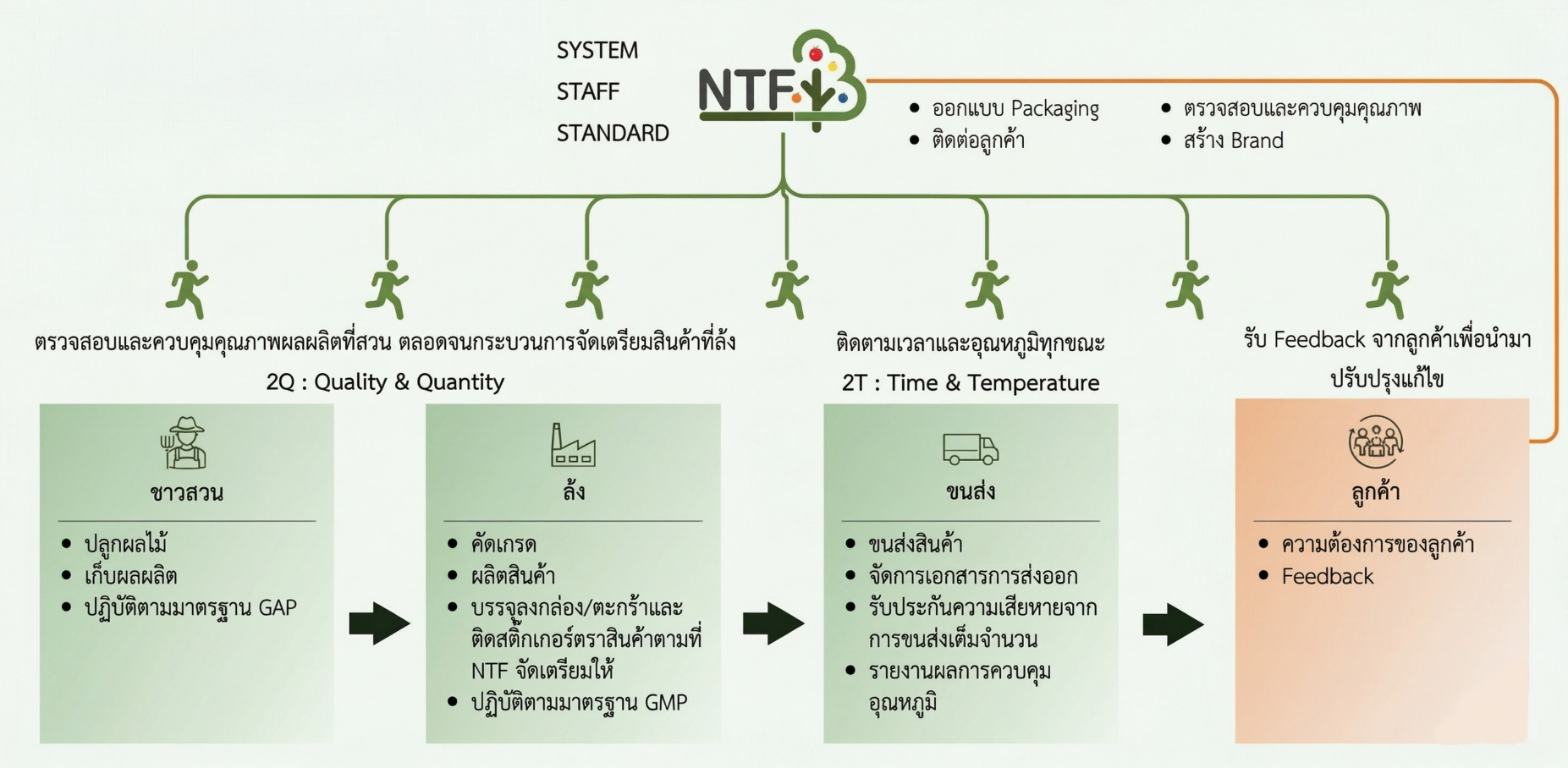
2Q2T Quality Control Standard.
The Company is committed to operating under its internal quality control standard “2Q2T,” an integrated quality management framework developed by the Company to control product quality at every stage of the supply chain, from origin to customer delivery. This standard is a crucial mechanism for maintaining product consistency, building customer confidence, and supporting business operations in the premium product segment, with the following key components:
-
Quality (Quality)
The Company has a quality inspection team that systematically conducts random product checks at every stage, from raw material reception, sorting, and packaging, to pre-export, to ensure that products meet specified quality standards in terms of taste, ripeness, and external appearance. This process enables the Company to maintain consistent product quality across all distribution units and mitigate quality risks in destination markets.
-
Quantity (Quantity)
The Company possesses the capability to procure products according to the quantity and grade required by customers at any given time, leveraging its network of fruit packing house partners nationwide. This enables the Company to manage product volumes continuously and flexibly according to seasonal variations. This approach supports the continuity of product delivery and mitigates risks arising from production uncertainties.
-
Time (Time)
The Company prioritizes time management at every stage, from harvesting, sorting, and transportation to product delivery, to ensure that products reach customers at an appropriate time for consumption. Efficient time control is a crucial factor in maintaining product quality and enhancing customer satisfaction.
-
Temperature (Temperature)
The Company implements temperature control at every stage of the product storage and transportation process to maintain freshness and reduce product deterioration.
Appropriate temperature control enables the Company to maintain product quality throughout the supply chain and enhance customer confidence in the destination markets.
Raw Material Acquisition (Overall)
The Company primarily procures products based on confirmed customer orders (Made-to-Order) and does not maintain an inventory policy. The Company will place orders with contracted fruit packing houses in quantities corresponding to these orders to enhance liquidity management efficiency, reduce inventory risks, and ensure product freshness and quality according to specified standards.
After the Company confirms the order and makes an advance payment to the fruit packing house, the packing house will proceed with product preparation. The Company will select only products that strictly meet the specified quality criteria, such as sweetness level, size, completeness of produce, and external appearance, and must pass residue inspection before delivery.
The Company prioritizes quality control of products at every stage of the supply chain, with oversight from the selection of packing houses, the receipt of raw materials, sorting and grading, control of contamination and foreign matter, quality inspection, product preparation, weighing, packaging, as well as the arrangement of products in containers.
Furthermore, the Company participates in observing product inspection processes conducted by relevant government agencies to ensure that products comply with the standard and safety requirements of the destination country.
Regarding transportation, the Company selects logistics service providers with expertise and comprehensive insurance for product damage throughout the transportation process. This helps mitigate risks related to product quality and enhances confidence for international customers. The product procurement process can be summarized in the following diagram:
Diagram of the Product Receipt and Delivery Process
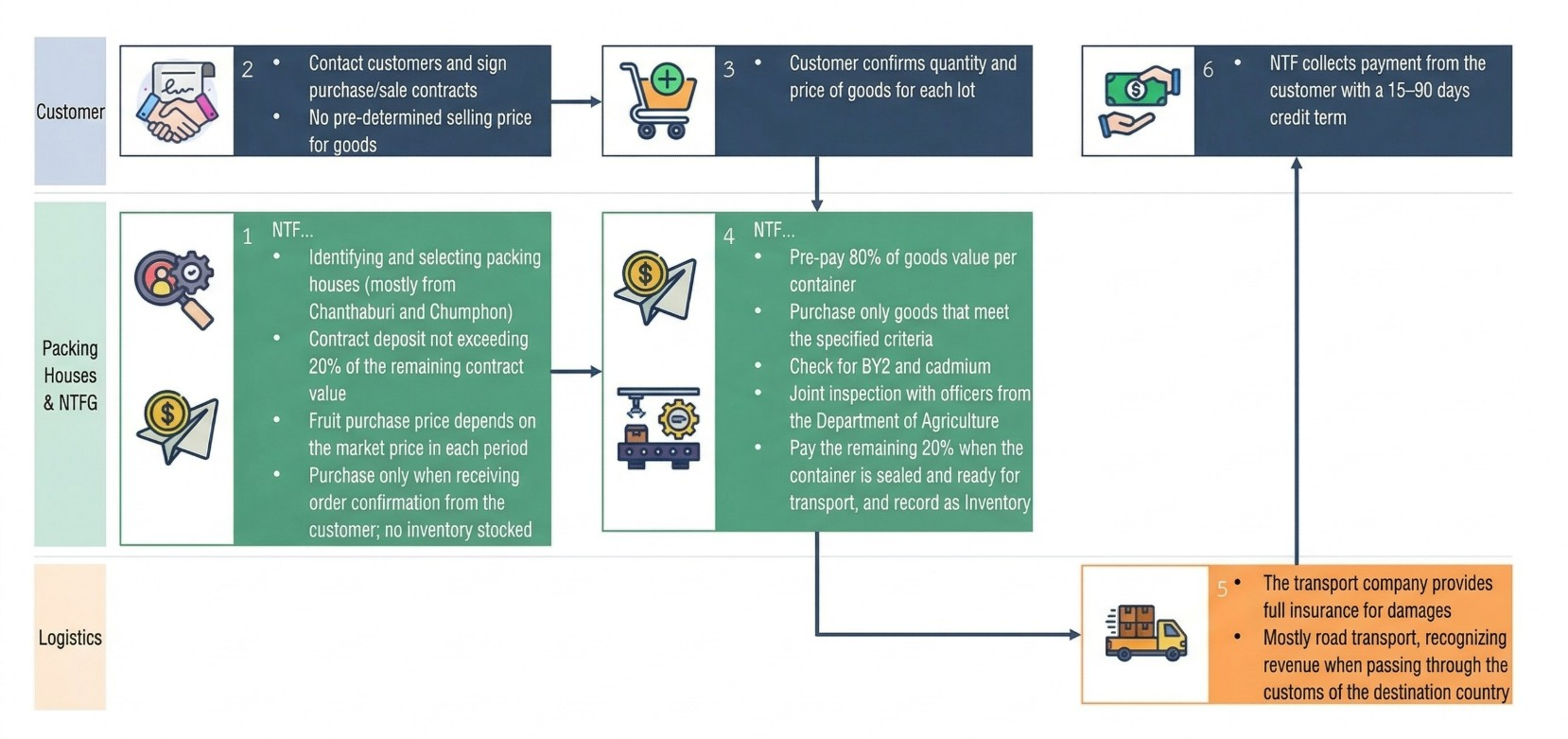
Diagram of the Quality Inspection and Preparation Process for Fresh Durian
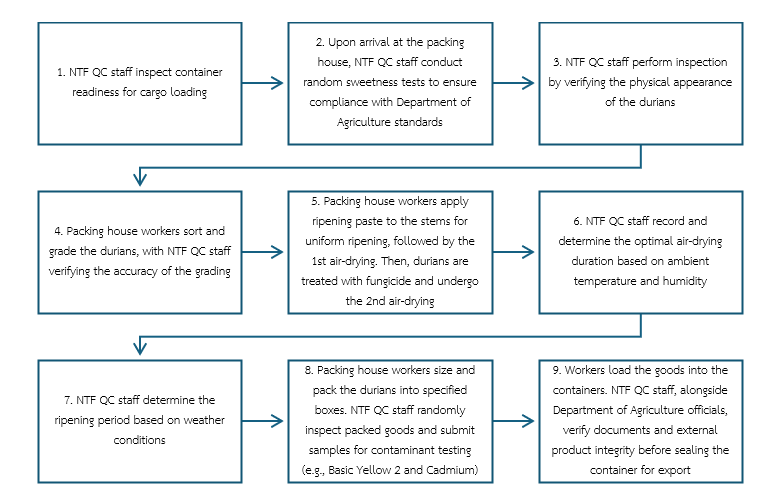
The machinery invested by the Company will help reduce product preparation time by at least 2 times in the stages of first drying, fungicide treatment, second drying, and size sorting for packaging into boxes. Previously, these stages took approximately 24 – 48 hours. The Company aims to reduce the duration of these processes to a maximum of only 4 hours. Currently, the Company is piloting the machinery at a major packing house and plans to install it at other packing houses in the future. This machinery is portable and can be moved for installation at packing houses in various areas nationwide, depending on the situation and production season. This investment transforms traditional manual operations into a precise and rapid semi-automatic system. In addition to reducing operational costs and time, it also helps maintain the freshness and quality of the produce, reduces resource waste, and elevates safety standards in the work process. This aligns with the goal of creating business value alongside sustainable environmental and social responsibility.
Diagram of the Quality Inspection and Preparation Process for Longan
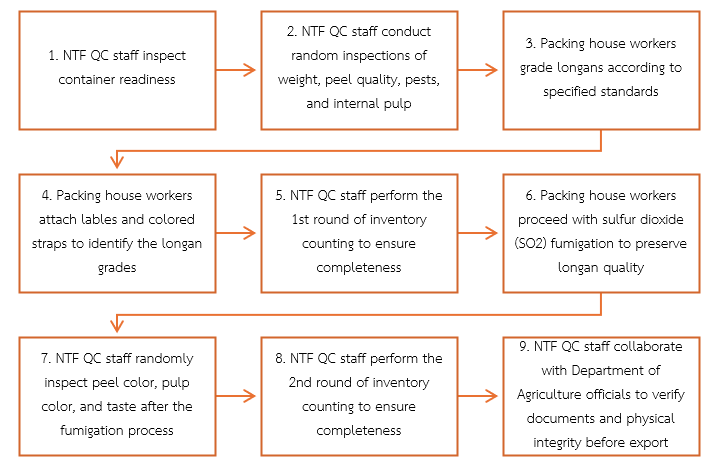
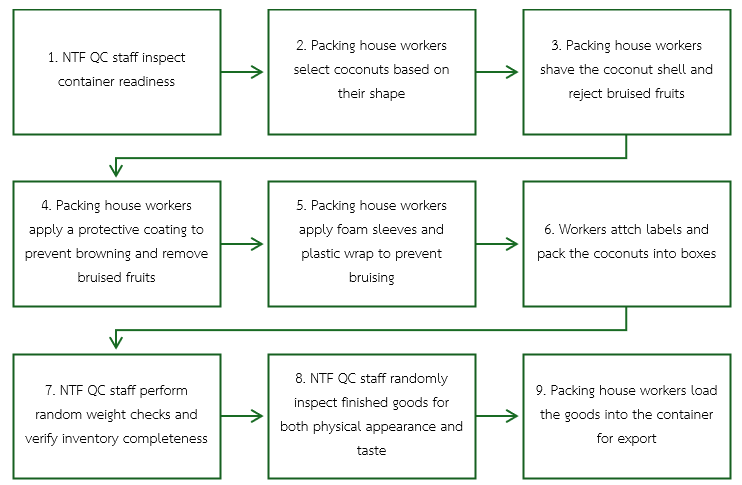
Diagram of the Quality Inspection and Preparation Process for Coconuts
Number of Raw-Material Distributors (Overall)
5
Production Capacity (Overall)
| Item | Unit | Unit (if Other) | Used | Capacity |
|---|---|---|---|---|
| None | Others | None | 0 | 0 |
Domestic/Overseas Purchase Proportion (Overall)
| Raw Material | Source Country | Value |
|---|---|---|
| Durian | Thailand | 1,861,814,029 |
| Longan | Thailand | 39,651,162 |
| Coconut | Thailand | 38,018,022 |
Projects Under Construction
Has Projects Under Construction (Y/N)
No
Debentures & Bills of Exchange
Has Debentures (Y/N)
No
Convertible Securities
Has Convertible Securities (Y/N)
No